

Search toggle
Say hello.
Focus Str. 5th Ave, 98/2 34746 Manhattan, New York
+1 222 44 55

Solar + Storage for Colorado Homes

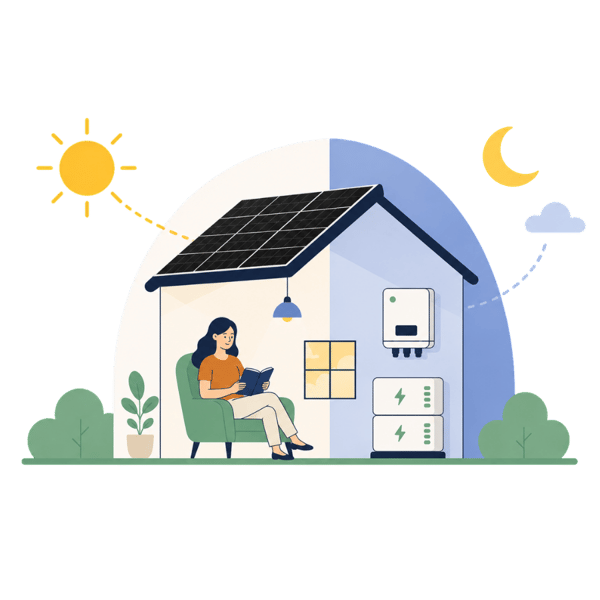
Solar and battery storage helps Colorado homeowners reduce grid dependence, use more of their own solar power, prepare for outages, and plan for future electric needs.

solar+storage_black

Already Have Solar?

Storage helps improve backup capability, evening energy use, and long-term flexibility for existing systems.

What Matters Most to You?

Solar + storage means different things to different households. Here's what it can do for yours.

High Bills and Rate Control

Your panels produce power when the sun is out. Your battery holds it for when rates are highest. The result is less dependence on the grid, and more control over what you actually pay each month.

Outages and Backup Power

A solar-only system shuts off when the grid goes down. Storage keeps selected parts of your home running: lights, refrigerator, medical equipment, for hours or days depending on your setup.

Long-Term Home Planning

An EV, a heat pump, a growing family. Your electricity needs will change. A well-planned system is designed around where your home is going, not just where it is today.

Why More Homeowners Are Pairing Solar With Storage

Electricity costs, outages, and home energy needs do not always line up with when solar panels produce power. Battery storage adds flexibility by helping shift energy use, support selected loads during outages, and adapt to how your household uses electricity over time.

Solar Only: Your panels produce power but anything you don't use goes back to the grid, often at a fraction of what you paid for it.

Solar + Storage: Your system captures that surplus and holds it for when you actually need it. You stop selling cheap and buying back expensive.

Solar Only: Production stops. Your home switches back to grid power, at whatever rate Xcel is charging that evening.

Solar + Storage: Your battery covers evening demand from energy you already produced. The grid becomes a backup, not a default.


Solar Only: Your system shuts off automatically. Solar panels alone cannot power your home when the grid goes down, it's a safety requirement.

Solar + Storage: Selected circuits stay on. Your home keeps running. That's the difference between an inconvenience and a crisis.


Solar Only: Solar produces when the sun is up. Your household uses most power in the morning and evening, exactly when production is lowest or zero.

Solar + Storage: Storage bridges that gap. You're drawing from your own energy reserves during the hours rates are highest. That's where the real savings come from.

Solar Only: EVs, heat pumps, additions, every upgrade to your home increases electricity demand. A solar-only system may not be ready for what comes next.

Solar + Storage: A planned solar + storage system is designed around your home's future, not just today. Expansion is built into the strategy from day one.

Start With Your Home’s Energy Profile

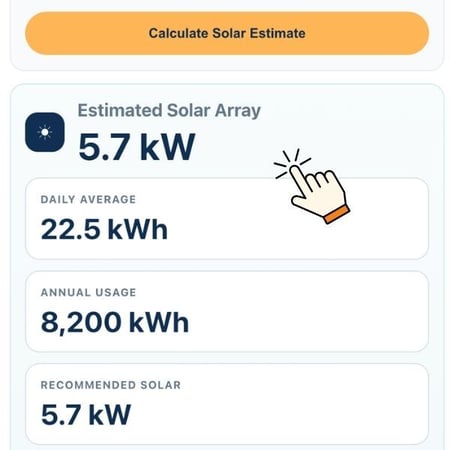
Estimate how much electricity your home uses today and explore how solar production could offset future utility costs over time.

EPE Consumption

Build Around What Matters Most

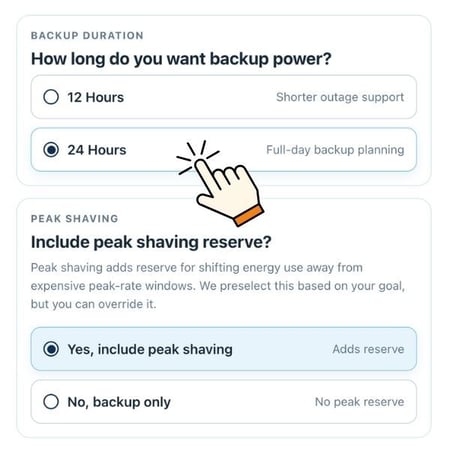
Explore backup priorities, outage planning, future EV charging, heat pumps, and other long-term energy goals before sizing a system.

EPE Backup

Compare Storage Options for Your Home

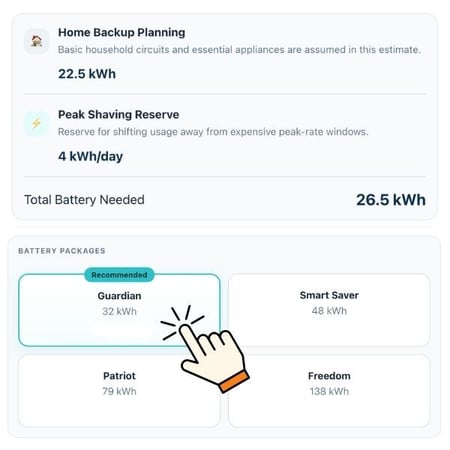
See how battery size, backup goals, and energy usage patterns shape different solar + storage strategies.

EPE Packages

Model the Long-Term Value

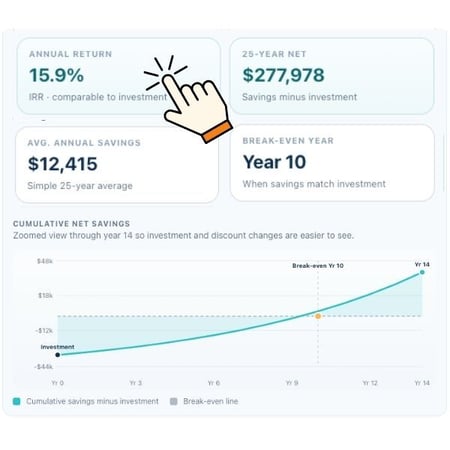
Review projected utility-cost scenarios, system assumptions, and how solar + storage may perform over time based on your household goals.

EPE ROI

Already Have Solar?

Storage Can Expand What Your System Is Capable Of.

Many homeowners installed solar before battery storage became practical, affordable, or relevant to their utility rates. Adding storage can help improve backup capability, increase how much of your solar energy you use at home, and create a more flexible long-term energy strategy.

Protect Your Investment

You already invested in solar, now make sure you're investment is getting you a good return by leveraging the control storage gives you.

Better Backup

Keep selected parts of the home running during outages instead of losing access to solar when the grid goes down. 

Better Control

Store excess solar production for evening use instead of relying as heavily on the grid after sunset.

Build for the Future

Create a stronger foundation for EV charging, heat pumps, or future electric upgrades.

constultation wide

Talk Through Solar + Storage Options

Wether you are comparing solar quotes, exploring battery backup, or trying to understand if storage is worth adding to an existing system. We give you a practical place to ask questions and understand the next step for your home.

 Solar + Storage Questions to Ask Before You Invest:

Can additional solar panels and battery storage be added to existing solar setup?

Often yes - the best path depends on your current inverter, electrical panel, system design, monitoring data, and backup goals. Some systems are easier to retrofit than others, so CEE can help review whether adding storage to your existing solar setup is practical and whether there are design constraints to know about first. 

Do I need battery storage if I already have solar?

Solar panels can reduce grid dependence during sunny production hours, but battery storage adds value if you want backup power and  more control over when stored energy is used. The main question is not “do I need a battery?” but “what problem would storage solve for my home?”


How do I determine battery size?

Start with what you want powered and for how long. Keeping a refrigerator, Wi-Fi, lights, and a few outlets running is different from trying to support broader home backup. A planning conversation helps separate essential-load backup from whole-home expectations so you do not overbuy or under-plan.

Is battery storage only useful for outages?

Backup power is one major reason homeowners consider storage, but it is not the only value.

Batteries can help shift solar energy to times when it is more useful, reduce stress around time-of-day electricity costs, and give homeowners more control as utility rates, EV adoption, data centers, population growth, and broader electrification increase pressure on the grid. U.S. electricity demand is expected to keep growing, with major demand drivers including data centers and the shift toward electrified transportation and heating


How do time-of-use rates affect solar + storage?

Time-of-use rates can make electricity more expensive during certain parts of the day, often when solar production is lower and household demand is higher. Storage may help reduce exposure to those higher-cost periods by making stored solar energy available later. The value depends on your utility rate structure, daily usage pattern, and how the system is configured.

How much does solar + storage cost?

Cost depends on solar system size, battery capacity, roof and site conditions, electrical work, selected equipment, financing, and available incentives.

 A solar + storage system can create predictable monthly costs over time compared to remaining dependent on changing utility rates. CEE’s role is to make those assumptions clear before you compare options, so you can evaluate the project like a long-term household infrastructure decision rather than a simple product quote.